Swervle Guide Tips
Swervle Tips for Faster Runs
Run a clean baseline first. Then change one thing at one corner and compare the full run time. Dirt and ice affect grip, while woods, desert and highlands describe settings that can present different visibility or elevation challenges. Read the course in front of you before applying any tip.
Dirt
Try releasing the throttle a little earlier at a familiar corner. On the next attempt, observe whether you leave the bend pointed at the next gate or have to steer back across the road. A wider path is worth testing when the space is there, but keep the gate in sight. Use the checkpoint counter to make sure an apparent shortcut still completed the section.
Ice
Set the car’s direction before the low-grip patch and try smaller steering inputs while crossing it. If your baseline slid wide, repeat the approach at a lower entry speed and compare how long it took to regain a straight line. An earlier slowdown is an experiment you can measure against a finish time. Use the braking input you need to reach the gate.
Woods
Trees can screen the next part of the road in a dense stretch. If you keep reacting after a gate comes into view, press C and test another camera angle on the same approach. Keep the setting that makes it easiest to see both the car’s heading and the space around the gate. Being able to pick out the exit earlier matters more than how fast the approach looks.
Desert
Look for what follows a crest or a ramp. The official game documents a ramp speed boost, which gives you less time to set up the next turn. If two jumps are close together in the route you are driving, make a run that keeps both the landing and the next gate in view. On a second run, try a different approach only where you know you will have room to straighten.
Highlands
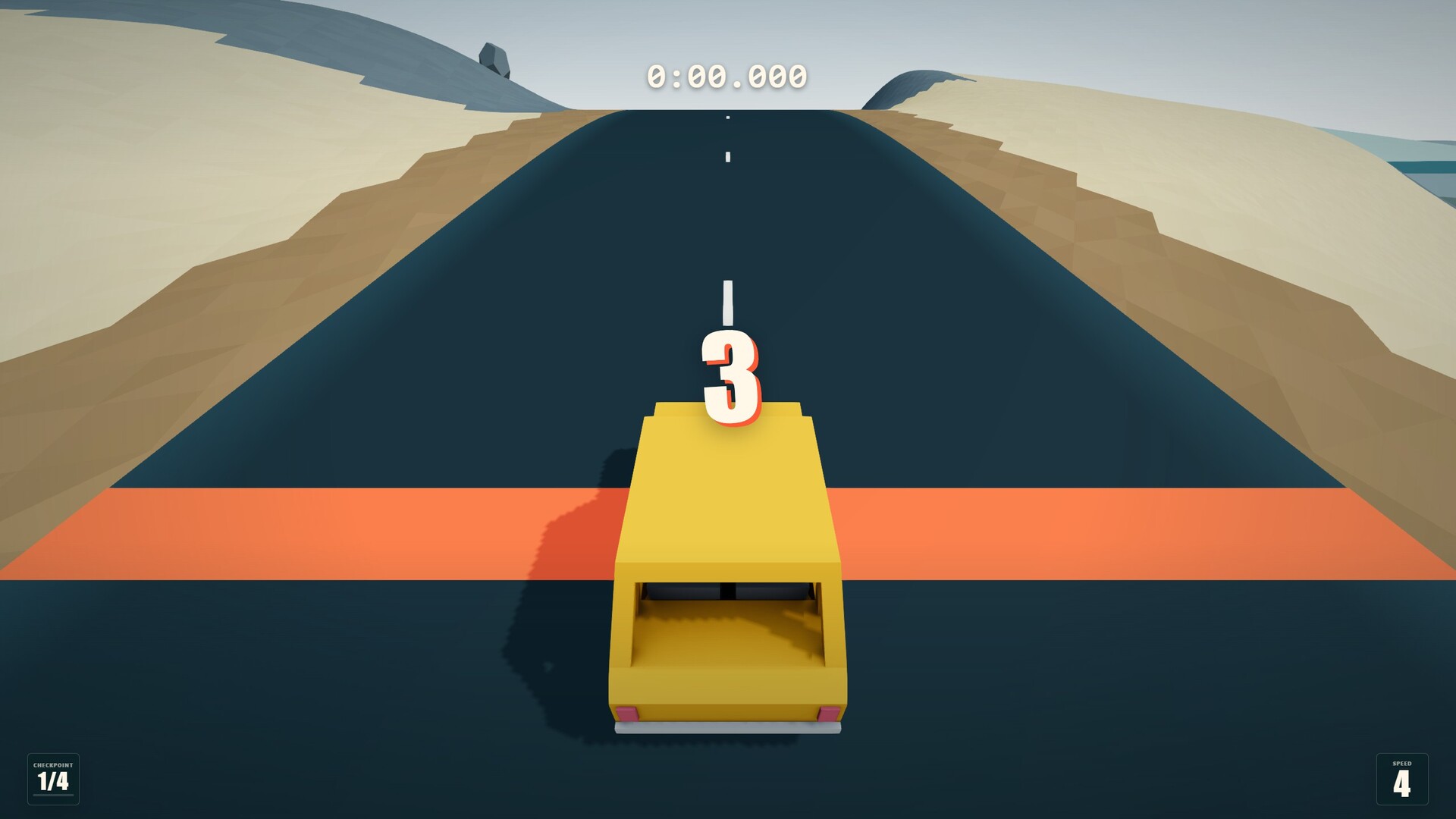
At a crest, hold a line that leaves room to react when the road comes back into view. If a descent ends in a bend, try lifting on an earlier landmark and see whether you can enter the turn without a late correction. Treat the handbrake as an input to test on that particular corner. Compare your time with a clean run before committing to the new line.
Pick a ghost close to your pace
Start with a leaderboard result a little faster than your best time on the same map. You can usually keep that car in view longer and see where the gap grows. Watch one braking point, turn or landing on each attempt. Switch to a faster ghost when you want to compare lines through a section you can already drive consistently. Press G to clear the view when the extra cars distract you.
Track progress on the same course
Write down the date, your first clean finish, and the one spot you plan to change. After a retry, record the new time and whether you recovered or missed your intended line. Keep a small log with columns for finish time, change tested, and what happened. Compare complete runs on the same course before using a result to judge which setup worked.
Check the developer’s driving reference for the underlying controls and grip rules. Use Swervle controls and how to play if you need the full reference for your keyboard or phone.